Blog
A Little Tortoise and a Big Responsibility
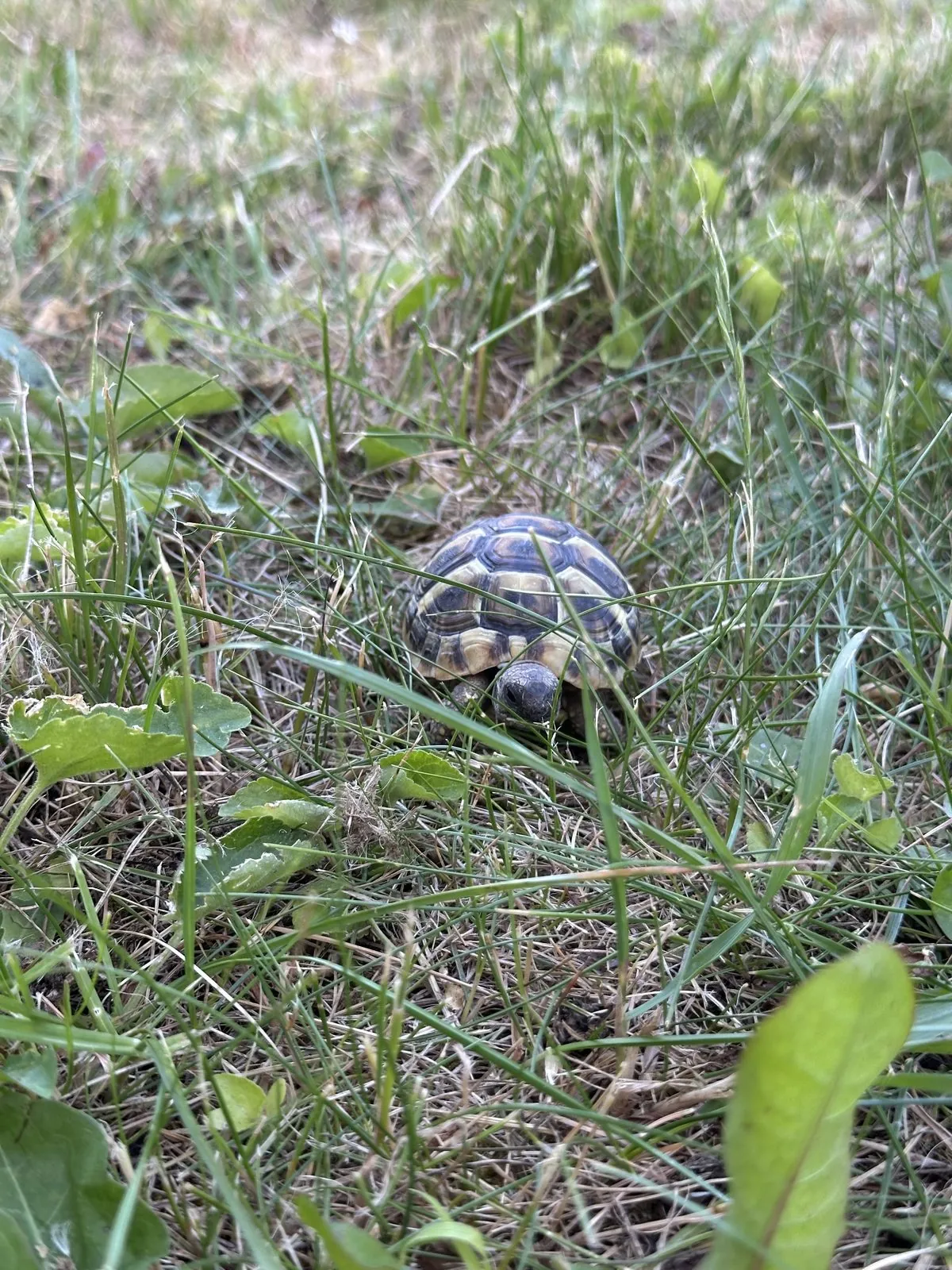
Some stories begin very quietly – with a tiny shell in the grass.
That is how we found her: a small tortoise, out and about in Leonberg all on her own. Far too small and far too fragile for the big wide world. And, as it later turned out, she already had a dangerous adventure behind her – she had fallen from a third-floor balcony. For such a small animal, a fall like that is life-threatening. That she came through it unhurt borders on a small miracle.
A safe place and fresh greens
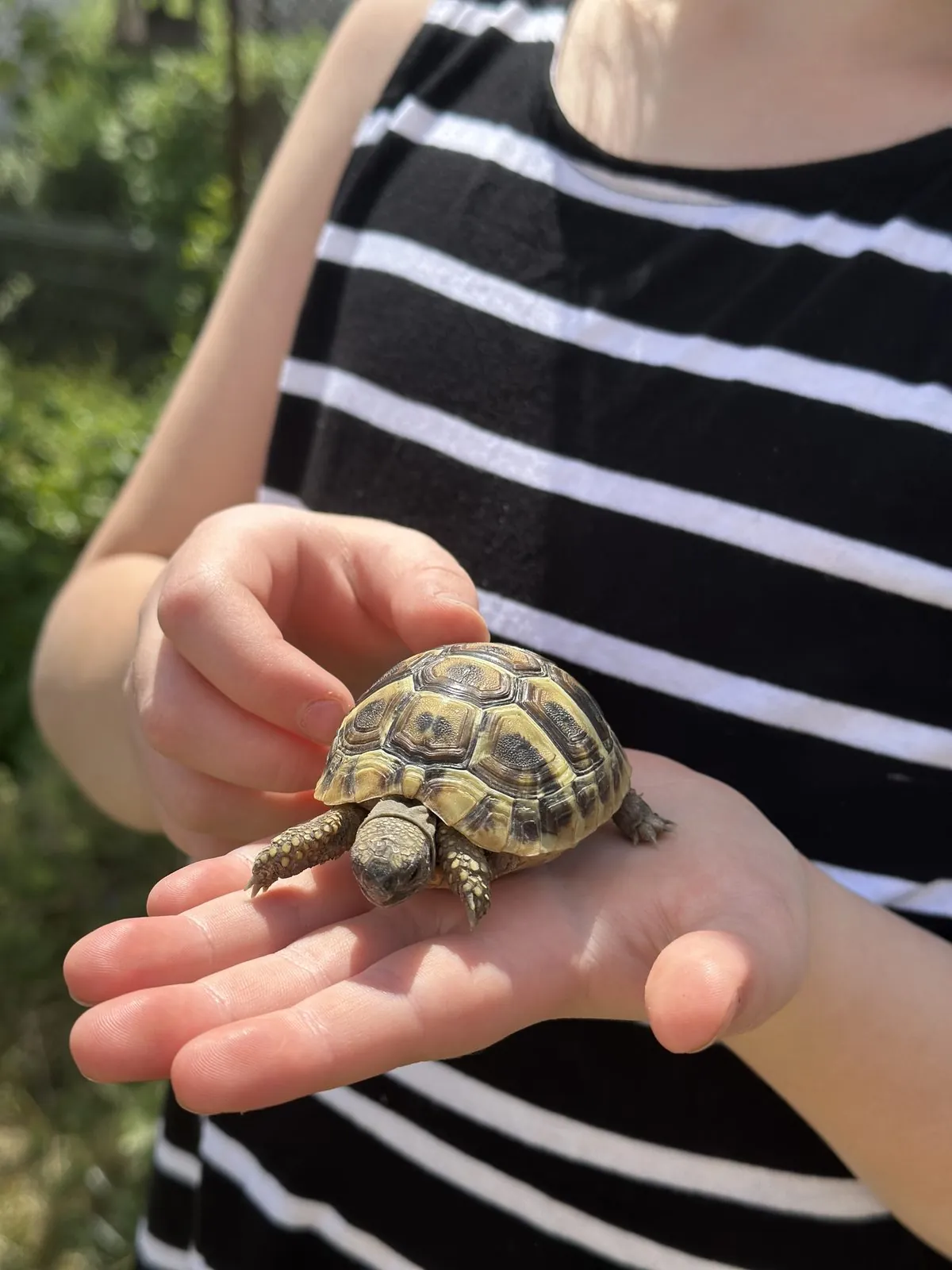
We took her in straight away. A quiet, sheltered spot, a little sunshine and fresh dandelion leaves – that was all it took for her to relax and start eating with relish. My children above all were enchanted by the little guest with the serious face and the slow, deliberate steps.
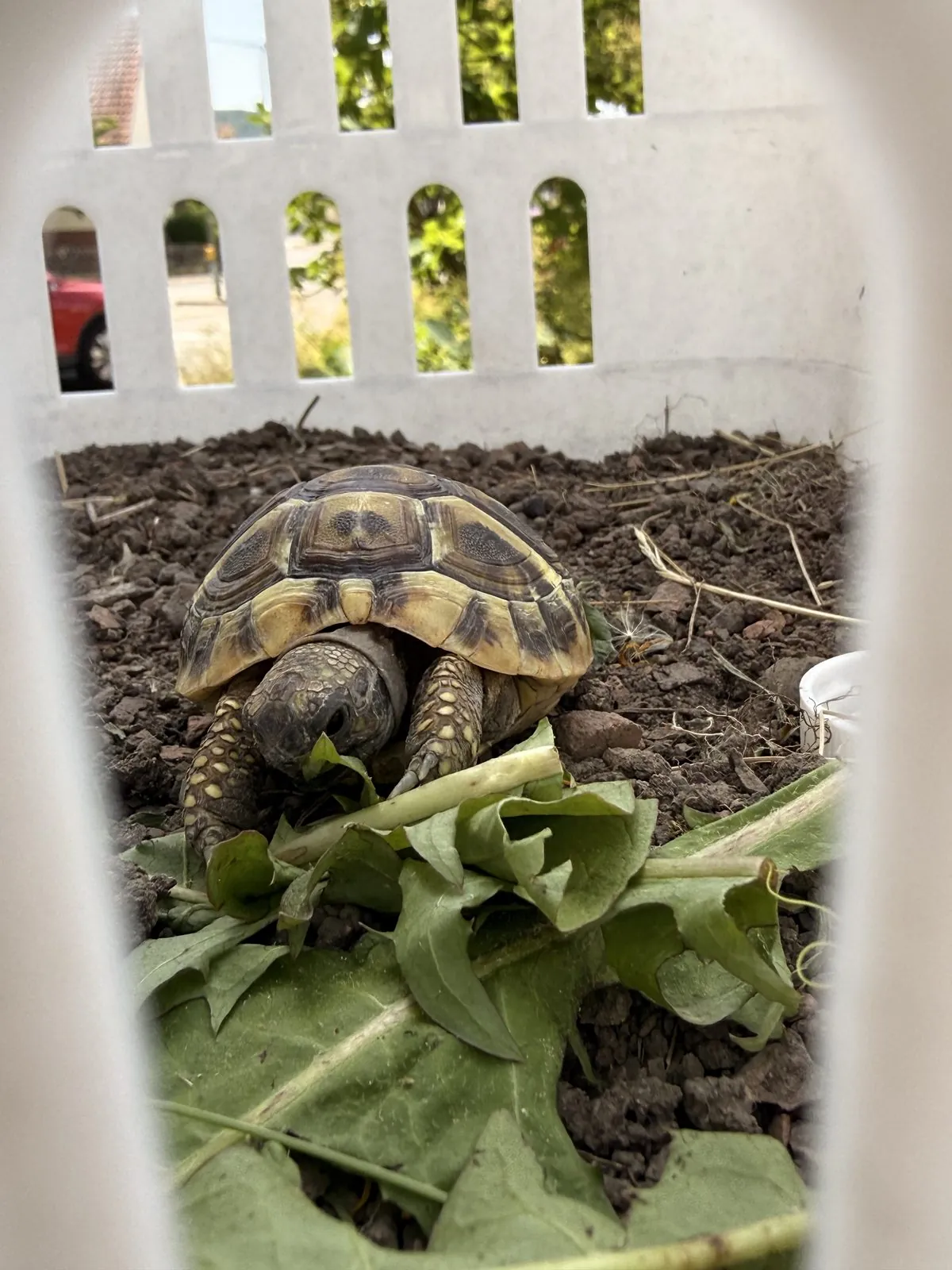
However much we had taken her to our hearts, a tortoise is neither a toy nor a souvenir. She belongs to someone – and we very much wanted to get her back home. But this is exactly where things get complicated in Germany. And for a very good reason.
Why you need papers for a tortoise
European tortoises are among the strictly protected species. Anyone who keeps one must have papers for it: a so-called CITES certificate, proving that the animal comes from legal captive breeding. On top of that, every tortoise has to be registered with the relevant nature conservation authority. These rules do not exist to make life hard for pet owners, but to protect an endangered species from illegal trade and poaching.
We politely asked the people the animal had been living with for exactly these documents. None could be produced.
The right decision, even when it is a hard one
That settled it for us – even though it was not an easy decision. Without proof of where it comes from, a protected tortoise may not simply be passed on. So, for the animal’s own protection, on 30 May 2026 we handed the little tortoise in at Leonberg police station. There she was officially taken into safekeeping “for the protection of property” – properly documented, with a certificate.
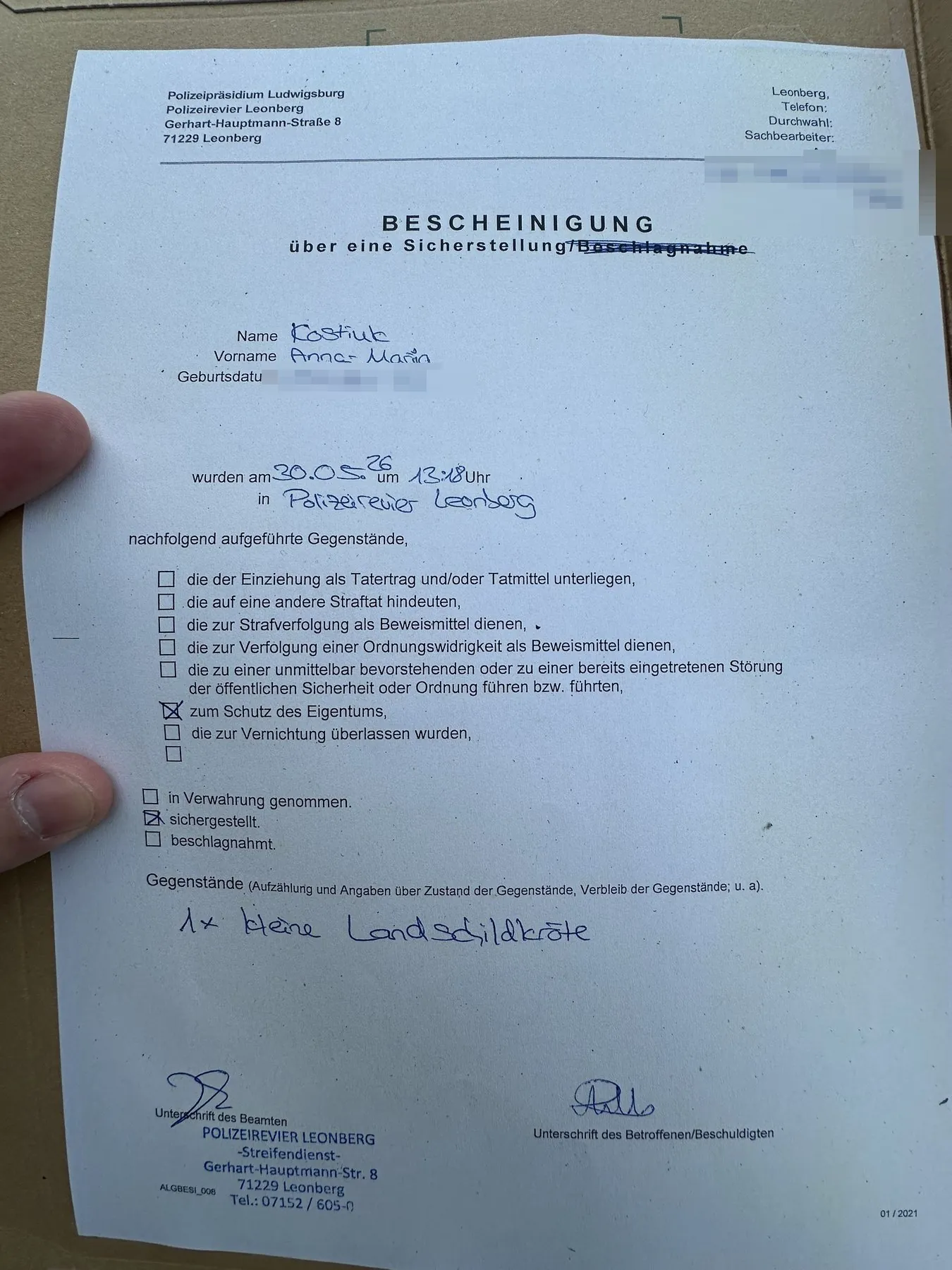
Now the authorities are making sure the little one goes somewhere safe – to someone who is allowed to keep her as her species requires, and with the right papers.
Was it hard to let her go again? Yes. But sometimes that is exactly what responsibility means: not doing the easy thing, but the right one.
If you ever find a tortoise yourself
If an animal of unknown origin comes your way, the best thing is to contact the police or the animal shelter. And if you are thinking of taking in a tortoise yourself, please find out beforehand about the papers you need and the duty to register. It is the surest way to make sure the animal really does well.
Our little tortoise made it. And we are grateful that we got to share a stretch of her journey.
Note: in Germany, European tortoises are strictly protected under the Washington Convention on International Trade in Endangered Species (CITES). Keepers need a CITES/EU certificate and must register their animals with the lower nature conservation authority.